
AI agents in auditing: the Big Four are moving fast, and liability stays human
AI agents in auditing: the Big Four are moving fast, and liability stays human
According to a report by Handelsblatt from 16 June 2026, EY, Deloitte, PwC and KPMG are actively working to deploy AI agents to handle independent audit steps in balance sheet reviews, tasks that until now have been the exclusive domain of human auditors.
EY is leading the charge, committing more than one billion dollars globally to new AI systems. The scale of that investment from the biggest names in the profession sends a clear signal: the potential is recognised, and the race to build the best solution is already underway.
Read the full Handelsblatt article here.
The question the industry has not fully answered yet
Speed is one thing. Accountability is another. When an AI agent makes a mistake in a balance sheet review, who is responsible?
That question sits at the centre of the current debate. Audit firms are taking on significant liability risk as they hand more of the process to automated systems. Staff are facing substantial changes to their roles. And regulators are watching closely how professional standards apply when the work is done by a machine rather than a licensed professional.
Technology delivers speed. Responsibility remains with the human.
What this means for audit quality in practice
The direction the Big Four are moving in reflects something the market has been building toward for some time. AI can process large volumes of financial data quickly, flag anomalies, and run consistency checks at a scale no team of analysts could match manually. That is genuinely useful in an audit context.
But audit work is not just data processing. It requires judgment, context, and the ability to stand behind a conclusion professionally and legally. Those requirements do not go away because a system is fast. They become more demanding, because the reviewer now needs to understand and validate outputs they did not produce themselves.
Where StrategyBridgeAI fits in
We work with verified, structured data and are already used by leading audit firms. StrategyBridgeAI is built for analytical quality that meets audit-grade requirements: traceable, reliable, and robust enough to hold up under professional scrutiny.
The platform is listed by the Institut der Wirtschaftsprüfer (IDW), which reflects the standard we hold ourselves to.
And at the end of the process, the human still makes the difference. Behind the platform is a team of corporate finance professionals who know their clients and can be held accountable. That is not a disclaimer. It is a design principle.
Read more about our data & security approach.
Source: Handelsblatt, "KI-Agenten erobern die Bilanz: bei Fehlern droht Haft", 16 June 2026, by Bert Fröndhoff.
More from this category
Explore related insights from StrategyBridgeAI.
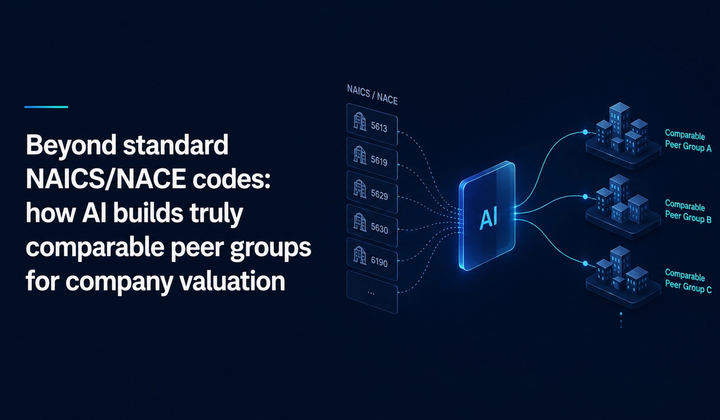
Beyond standard NAICS/NACE codes: how AI builds truly comparable peer groups for company valuation
Classic NAICS/NACE codes lump niche providers into peer groups that don’t fit. See how AI-driven classification builds comparables analysts can confidently defend.
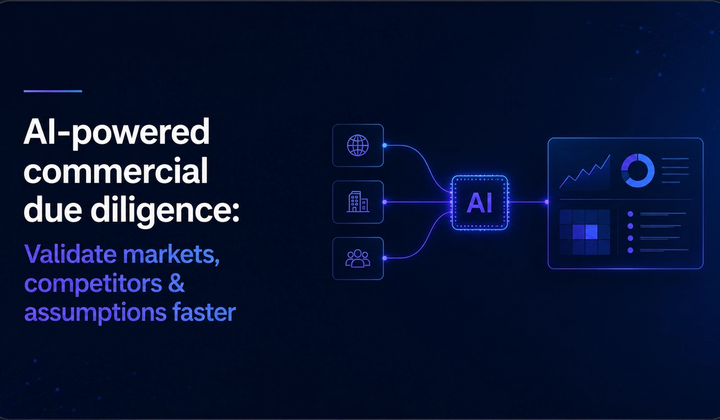
Automated commercial due diligence: how AI helps strategy teams validate market assumptions in hours instead of weeks
Commercial due diligence isn’t slowed down by analysis, but by research. See how AI helps strategy and M&A teams validate markets in hours instead of weeks.
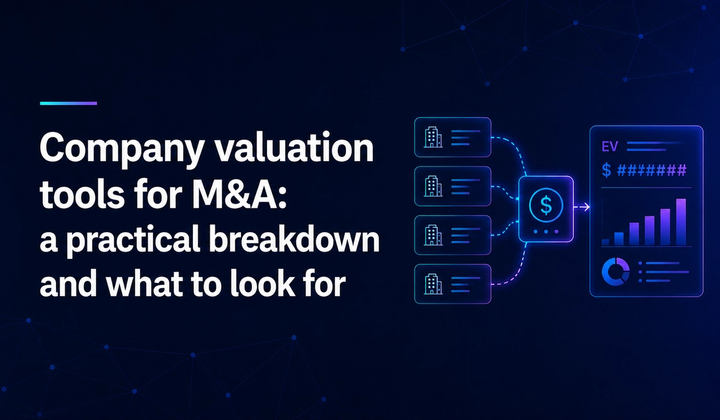
Company valuation tools for M&A: a practical breakdown and what to look for
Valuation is where deal decisions get made and defended. Here is a practical breakdown of what valuation tools need to deliver for M&A, PE, and advisory teams, and which approach holds up best.