
EU AI Act compliance for audit firms: what the documentation requirements actually mean
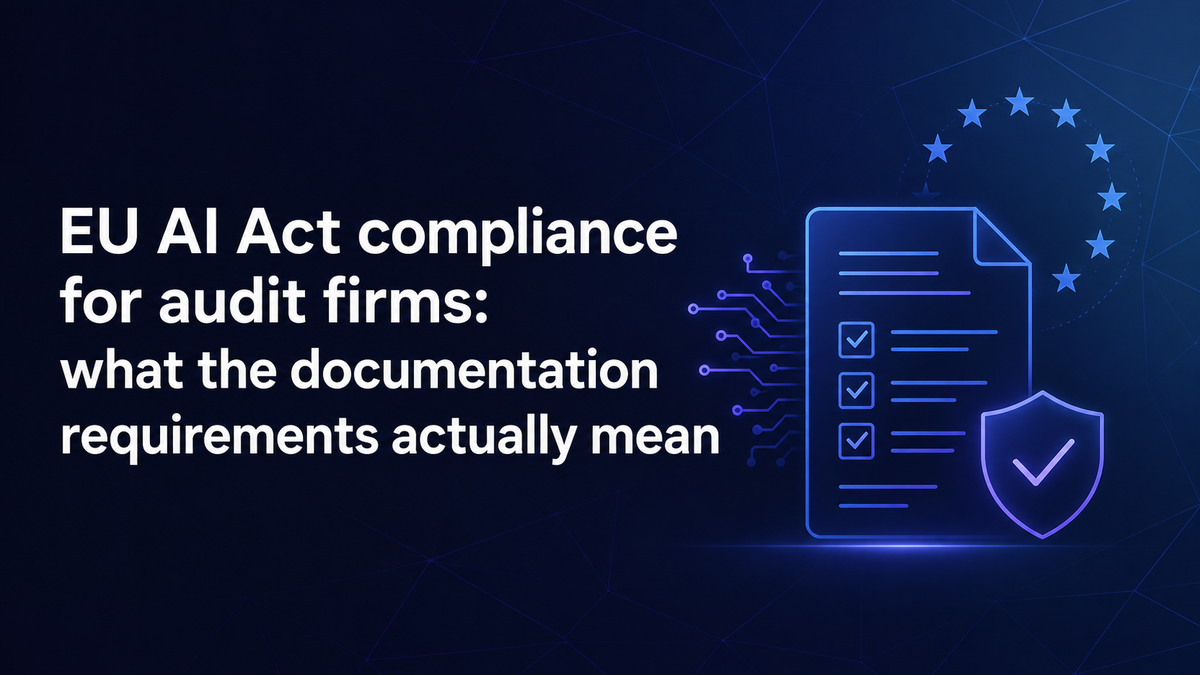
The EU AI Act is no longer a future project. It entered into force on 1 August 2024. Prohibited AI practices and AI literacy obligations have applied since February 2025. Transparency obligations under Article 50 apply from August 2026.
For audit firms, valuation practices, and M&A advisory teams, this creates a specific compliance question: does the AI you currently use in professional analysis meet the documentation and oversight standard the regulation now requires?
This article sets out what the Act actually says, what it means for audit and valuation work in practice, and what audit teams need to check about their current tooling.
What the EU AI Act says, and who it applies to
The EU AI Act (Regulation 2024/1689) applies to providers and deployers of AI systems operating in the EU. Audit firms, valuation practices, and advisory teams that use AI tools in client work are deployers under the Act.
Deployers are responsible for:
- Ensuring human oversight and monitoring of AI systems they use
- Reporting serious incidents and malfunctioning to the relevant authority
- Maintaining records of how AI systems are used and how outputs are reviewed
These obligations are not limited to firms building AI. They apply to any professional firm deploying third-party AI tools in work that affects others.
How the Act classifies AI systems
The Act divides AI systems into risk categories. The classification determines which obligations apply.
Prohibited systems are banned outright. These include AI used for social scoring, real-time biometric surveillance in public spaces, and systems that exploit psychological vulnerabilities.
High-risk systems face the most significant obligations. Annex III of the Act lists the categories. Relevant to financial and professional services: AI systems used in creditworthiness assessment and in the administration of critical infrastructure are explicitly listed. AI used to inform financial decisions, valuations, or due diligence conclusions may fall into this category depending on the specific application and the nature of the decision being supported. Whether a specific use case qualifies as high-risk requires legal assessment against the Act's definitions and Annex III. Firms should not assume the answer either way without that analysis.
Minimal-risk systems face no binding obligations under the Act, though the Commission encourages voluntary codes of conduct.
The vast majority of AI systems currently in use in the EU fall into the minimal-risk category. However, AI used to support professional conclusions that carry legal or financial liability sits in a different position. The documentation and oversight standards that apply in professional practice, and the liability attached to that work, mean that the requirements of the Act are highly relevant regardless of how any specific tool is ultimately classified.
The three requirements that matter most for audit and valuation work
1. Source documentation and traceability
The Act requires that AI-generated outputs used in professional analysis can be linked to verifiable sources. Transparency obligations under Article 50, including requirements around AI-generated content and its provenance, apply from August 2026.
In practice, this means: if an AI tool generates a market figure, a benchmark, or a comparable company set without showing where that data comes from, that output does not meet the standard the Act is moving toward for regulated professional use.
The question to ask about any AI tool in current use: can every figure in the output be traced back to a named, verifiable primary source?
2. Reproducibility and audit trails
Under the Act, providers must have a post-market monitoring system in place, and providers and deployers must report serious incidents and malfunctioning. For audit teams, the practical implication is direct: the AI tools used in professional work must produce outputs that can be reviewed, re-run, and explained after the fact.
An AI tool that produces different results from the same inputs, or that cannot show what data it used, cannot support a work paper that needs to hold up under review. This is not a new quality standard. It is now also a regulatory expectation.
3. Human oversight
The Act requires deployers to ensure human oversight and monitoring of AI systems. For audit and valuation practices, the standard expected is that a qualified professional reviews AI-generated outputs before they are relied upon in a conclusion, a report, or an opinion.
This is standard good practice. What the Act adds is a documentation requirement: the oversight must be recorded, not just assumed to have occurred.
What this means for audit firms using AI today
Many audit and advisory teams have integrated general-purpose AI tools into market research, benchmarking, or company analysis workflows. In many cases, the outputs look credible but the underlying sourcing is opaque, and the results vary on re-run.
Under current audit standards, that is already a quality problem. Under the EU AI Act, it is also a documentation and oversight problem with legal consequences for deployers.
The specific questions audit teams should be asking about the AI tools they currently use:
- Can every data point in the output be traced to a named primary source?
- Does the tool produce identical results from identical inputs?
- Is there a complete record of what data was used and when?
- Is human review of outputs documented before they are used in client work?
- Does the tool support point-in-time analysis for historical valuations or legal proceedings?
If the answer to any of these is no, or uncertain, the firm is carrying compliance and liability exposure that did not exist at the same level before the Act applied.
Point-in-time analysis: a specific requirement for tax, legal, and valuation work
One requirement that receives less attention than it deserves is point-in-time analysis, also called stichtagsbezogene Rückrechnung in German-language valuation practice.
For tax disputes, legal proceedings, divorce valuations, and regulatory matters, the relevant date is often months or years in the past. The analysis must reconstruct the market or company view as it stood at that specific historical date, with full source documentation showing that the data was available and verifiable at that time.
Most general-purpose AI tools cannot do this reliably. They either use current data or produce outputs that cannot be tied to a specific historical date with traceable sources.
For audit and valuation work involving historical dates, this is not a minor limitation. It is a fundamental gap in the quality of the analysis.
Frequently asked questions
Does the EU AI Act apply to audit firms that use third-party AI tools?
Yes. Audit firms that deploy AI tools in professional work are deployers under the Act. Deployers are responsible for human oversight and monitoring of AI systems, and for reporting serious incidents and malfunctioning.
When do the transparency requirements take effect?
Transparency obligations under Article 50, including requirements relating to AI-generated content and its provenance, apply from August 2026. Human oversight and incident reporting obligations for deployers are already in force.
What makes an AI output suitable for audit-grade work under current standards?
Source citation per data point, reproducible results from identical inputs, a complete audit trail, and documented human review before outputs are relied upon. These are the quality standards that apply in professional audit practice and that the Act now reinforces as regulatory expectations.
Is AI used in due diligence automatically classified as high-risk under the Act?
Not automatically. Whether a specific AI application qualifies as high-risk under Annex III requires legal analysis of the Act's definitions and the specific use case. Firms should not assume that AI used in financial analysis is either inside or outside the high-risk category without that assessment.
What is the penalty for non-compliance?
The Act provides for fines of up to 35 million euros or 7% of global annual turnover for violations of the prohibited AI provisions, and up to 15 million euros or 3% of global annual turnover for other violations. Enforcement is by national market surveillance authorities. Firms should take independent legal advice on how the Act applies to their specific AI use cases and jurisdictions.
How StrategyBridgeAI is built for audit-grade requirements
StrategyBridgeAI is purpose-built for the documentation and reproducibility standards that professional audit and valuation work requires. The platform is listed by the Institut der Wirtschaftsprüfer (IDW) and is used by more than 150 clients across audit firms, M&A advisors, and banks.
Deterministic, reproducible output. Identical inputs produce identical outputs. Every analysis is reproducible and can be re-run and reviewed by an auditor, regulator, or counterparty.
Source citation per data point. Every figure links to a verified primary source, classified by source quality (Tier 1 to 5) and validated through a structured three-point plausibility check: possible, plausible, probable.
Point-in-time analysis. StrategyBridgeAI supports historical valuations with date-specific, traceable data pulls. For tax disputes, legal proceedings, and regulatory matters, this is a core requirement that very few AI tools on the market support at all.
Direct competitive benchmarking. Rather than sector-level averages, the platform delivers benchmarking against structurally comparable companies, which is a material quality improvement for valuation and fairness opinion work.
GDPR-compliant infrastructure. Hosted on German servers. No data sharing with third parties. Full data separation between clients and mandates.
The EU AI Act does not change what good audit practice looks like. It makes the documentation of that practice a legal requirement. Firms relying on AI tools that cannot show their working are now carrying exposure they did not have before.
See how StrategyBridgeAI supports audit-grade analysis for valuation, due diligence, and compliance work. Book a demo.
Sources: European Commission, EU AI Act official text and implementation timeline; European Parliament, Artificial Intelligence Act, Regulation 2024/1689. This article is for informational purposes only and does not constitute legal advice. Firms should seek independent legal counsel regarding the application of the EU AI Act to their specific circumstances.
More from this category
Explore related insights from StrategyBridgeAI.
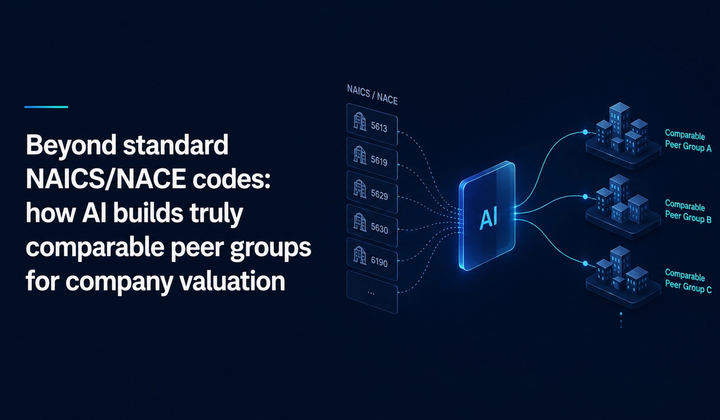
Beyond standard NAICS/NACE codes: how AI builds truly comparable peer groups for company valuation
Classic NAICS/NACE codes lump niche providers into peer groups that don’t fit. See how AI-driven classification builds comparables analysts can confidently defend.
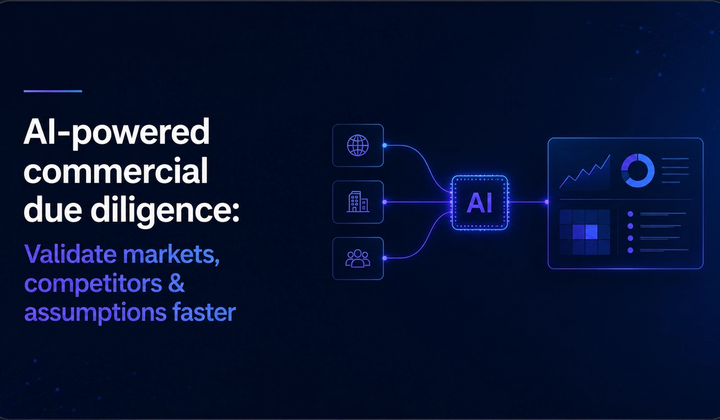
Automated commercial due diligence: how AI helps strategy teams validate market assumptions in hours instead of weeks
Commercial due diligence isn’t slowed down by analysis, but by research. See how AI helps strategy and M&A teams validate markets in hours instead of weeks.
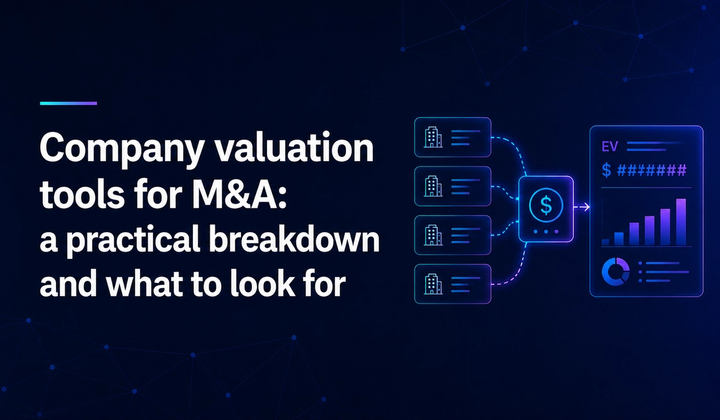
Company valuation tools for M&A: a practical breakdown and what to look for
Valuation is where deal decisions get made and defended. Here is a practical breakdown of what valuation tools need to deliver for M&A, PE, and advisory teams, and which approach holds up best.